




































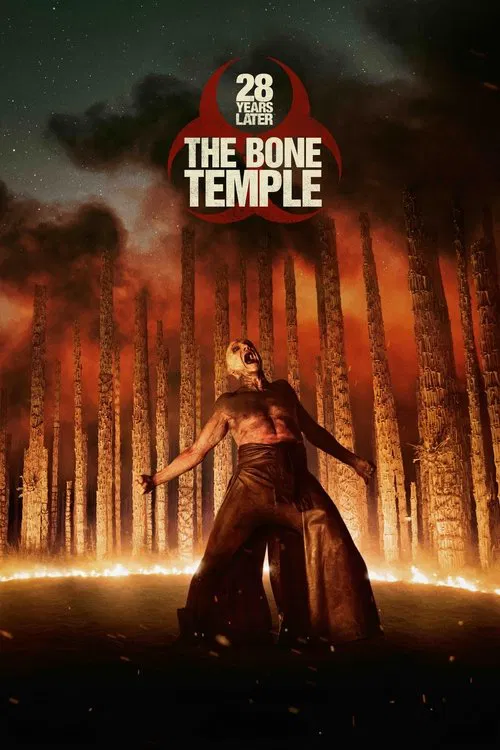
The 28 Days Later franchise has, over time, become an “apocalypse movie” standard. After three movies, all almost exclusively about random people within a post-apocalyptic United Kingdom, many people assumed that the next film in the franchise would be more of the same.
When a movie titled “The Bone Temple” was announced, it became obvious it would be a little different from the rest.
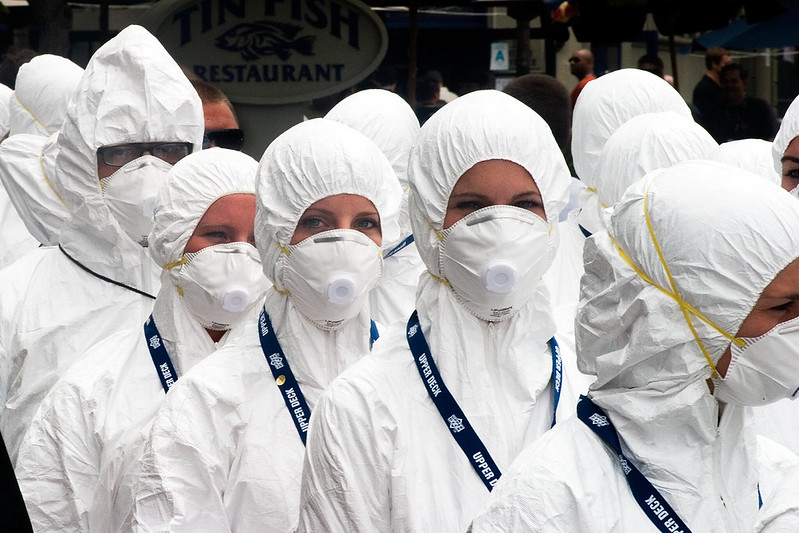
The Bone Temple and its surrounding movies are set in the U.K. following a national pandemic of a disease that makes the victim kill or infect the people around them. To contain the virus, the rest of the world decides to quarantine the whole country, leaving its residents to die or become infected. It’s one of those zombie movies where everyone refuses to use the word “zombie” at any point, meaning they call the zombies some weird other thing like “the Infected.”
The Bone Temple decided to pick up where 28 Years Later had left off, which was really cool to see. In the previous films, there had been little to no continuity, partially because of the time difference. Even though there was continuity, it still managed to be a separate story all on its own, just with some of the same characters as past movies.
The movie mainly surrounds a satanic cult, all named “Jimmy,” that goes around sacrificing and torturing people. They stumble upon Dr. Ian Kelson, whom they mistake for Satan due to his orange-colored skin and control over one of the infected.
The Jimmy plotline was pretty hard to watch at some points.
The 28 Days Later franchise is usually pretty gory, but the violence in this movie seemed like it would have been too much for even the most die-hard gore fanatics out there. Pretty much every scene featuring the Jimmys had some kind of gruesome death, which got super old and disgusting after a certain point.
That being said, the actual meat of the Jimmy story was decently interesting. Throughout the movie, the implication is that the “lead” Jimmy has some kind of psychosis, which is what leads him to believe that he’s the son of Satan and can hear him in his head. At one point in the movie, he describes his symptoms to Kelson, who obviously recognizes the symptoms. It was very refreshing to have the movie not just hand you that conclusion.
It was pretty interesting to learn more about the Jimmys, even if what they were doing was insane. In the last movie, we’d gotten a bit about them, but it was cool to see a group of people who had pretty much no exposure to real civilization. Their inclusion helped flesh out the franchise in a way it hadn’t really been fleshed out before.
Dr. Kelson’s plotline was also super interesting. In this one, he’s essentially able to domesticate the infected “alpha” of the woods, Samson. He was also in the last movie, but we mainly saw him violently attacking the protagonists. Before The Bone Temple, there hadn’t been a lot relating to a cure, and watching the process of an actual pre-apocalyptic medical doctor trying to cure the virus was very interesting.
Dr. Kelson, though he probably won’t be returning for other movies based The Bone Temple’s ending, was the best part of all of it. The scene where he’s pretending to be Satan to appease the Jimmys is insane and super funny at what’s otherwise a pretty stressful point in the movie. It toes the line of “embarrassing” and “cool as hell,” but stays enough on the “cool” side that it doesn’t matter how lame it is. It really puts into perspective how even this “hardened” apocalypse survivor is actually just a lame old guy.
The best change they made was that the movie continued past storylines. Famously, the 28 Days Later franchise doesn’t really follow the same people or plot points because of the time difference. The Bone Temple meant that we actually got to tie up loose ends for a lot of really interesting characters. Jim, played by Cillian Murphy all the way back in 28 Days Later, reappeared. Deciding to make all of the storylines converge was a really good writing decision on the filmmakers’ end.
The Bone Temple has shaped up to be one of the best horror films of the decade. It took an already-beloved franchise and improved on it in a ton of unnecessary but good ways. Even if it’s not your genre, it’s absolutely worth checking out because of how good the plot is. If the second film in the trilogy is already this good, just imagine what we all have to look forward to for the next one.