





























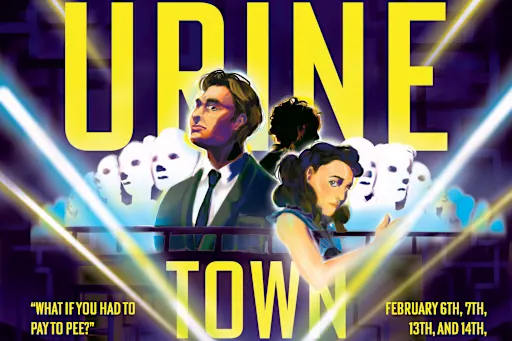
VPM Drama has once again knocked it out of the park with their production of Urinetown! Amazing acting, excellent choreography, and phenomenal costumes made this musical shine in a truly special way. I was lucky enough to attend the preview, and am eternally grateful to the Stage Manager, Lilah Heifetz, for inviting me.
The basic overview of the premise—I won’t be going into specifics of the plot in this article—is that due to immense water shortages, bathrooms are now privately controlled by the megacorporation Urine Good Company (UGC), who charge harsh fees and impose immense consequences on any caught evading them. This sounds ridiculous, and the musical doesn’t waste any time trying to deny it! One of the things I love most about this show is that it uses strategic fourth wall breaks through Officer Lockstock (Blue Bartlett) and Little Sally (June Witt), the narrator characters, to avoid getting bogged down in diegesis. They make it clear from the get-go that this is an allegory, allowing the audience to suspend their disbelief and just enjoy the narrative.
It’s a well-constructed allegory too, especially in Act I! While you might not expect it from the name, Urinetown contains a lot of rather thoughtful social commentary. The character of Caldwell B. Cladwell (Daniel Mueller) is a great example of this—the song Don’t Be the Bunny, in addition to being performed with hilarious gusto, offers genuine insight into the rhetoric of oppressors. They perpetuate themselves under the justification that they need to do unto others, before others do unto them. That might sound rather serious, but I’ll remind you that it is a very funny show, which honestly makes the incorporation of social critique that much more impressive.
The humor involves quite a bit of lampshading and a generous helping of dramatic irony, but it never felt like too much. Of course, not all of it is self-aware jokes—there’s a number of lines in this show that are absolutely hysterical and completely within all four walls. Not to mention, there’s quite a few recurring bits throughout the show, none of which ever felt like they got old—on the contrary, they often got progressively funnier!
The banter between the narrators felt genuine and witty enough to give the switch to serious moments a certain gravitas. The entirety of the show strikes a remarkable tonal balance, especially moving into the second act. It’s an inherently ridiculous show—the premise is nonsensical, the characters have names like Billy Boy Bill (Elliot McKay), and important moments are regularly bookended by a fourth-wall breaking wisecrack. Yet it still manages to draw audiences in, cultivating serious investment in these larger-than-life characters through the incredible and dedicated performances of the actors.
The cast did a spectacular job. The entire show sounded spectacular, and each character felt vibrant. The little extra touches actors added—like Penelope Pennywise’s (Avery Haworth) dramatic exits—were delightful. The ensemble was especially wonderful, with the additional speaking roles within them lending depth to the world and making their integral role in the show clear. They absolutely shined in every number and had some seriously show-stopping choreography (created by Sara Bartlett), with The Cop Song and Act I Finale being personal favorites.
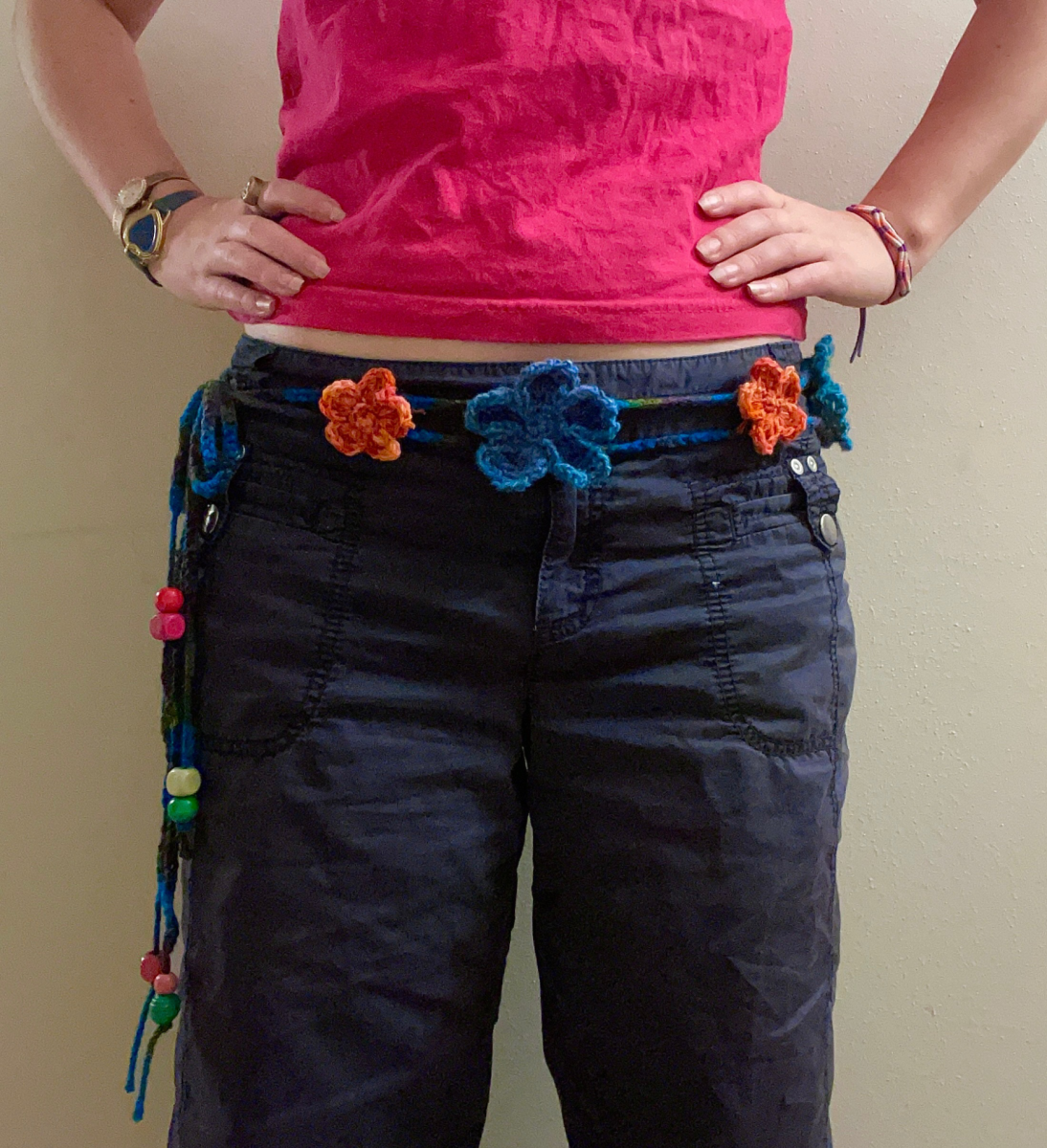
I also adored the costumes in this show—the costume designer (Allison Hinze) and crew (Anna Wagner, Maggie Benton, Alexandra Peyrot, and Lydia Miller) deserve a million flowers for their fantastic work. Hope Cladwell’s (Sabrina McKay) costume characterizes her perfectly from the moment she first steps on stage, and the cop designs were inspired. Not to mention the ensemble (again)!! They’re divided into the UGC staff and the Poor Ensemble, with the UGC staff all dressed in dark corporate wear and the Poor Ensemble wearing the distilled essence of the word tubular. It is impossible for me to overstate how awesome I think the Poor Ensemble costumes are. Their vibrant colors also contrast marvelously with the UGC staff, further highlighting the divide between their worlds and creating an excellent visual effect in the larger musical numbers.
Speaking of visual effects, the set? Incredible. The brutalist structure works perfectly, and is highlighted beautifully by the lighting—which was also great, especially in Follow Your Heart. Every branch of crew did a fantastic job. The amount of work that must have gone into this show is frankly staggering, and I know I’m only seeing part of the picture. Theatre, and the people who pour themselves into it, have always astounded me for precisely that reason.
At the heart of Urinetown—narratively, thematically, and I would argue within the production in general—is this beautiful, genuine sense of care. It’s a show that simply can’t work unless the entire production team is willing to commit, fully and seriously, to the bit. And commit they did. It was a fantastic show, and if you missed it, be sure to keep an eye out for future VPM Drama productions. I assure you, it’s worth it.