














































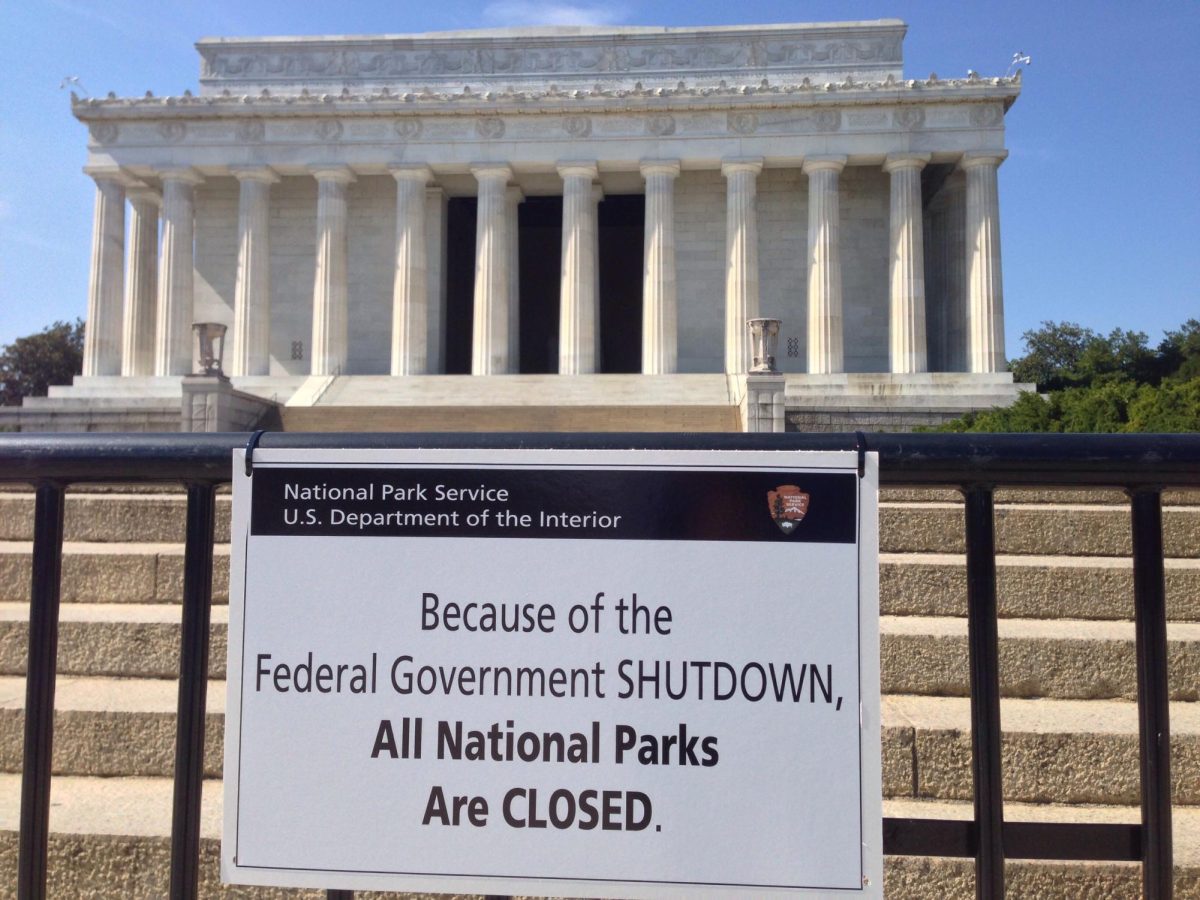
Finally, after 43 days of the government being shut down, Congress and the President reached an agreement and passed a bill allocating the federal budget on November 12th, a record 43 days of uncertainty with many reverberations throughout the nation. Let’s get a rundown of the aftermath of the longest shutdown in the government’s history.
To review, during the shutdown, the nation faced challenges such as 1.4 million government employees not being paid and 730,000 being forced to stay on the job while the rest couldn’t work. This caused reverberations in the form of more flight delays, holdups to processing legal federal-issued documents or support programs like passports and the Supplemental Nutrition Assistance Program (SNAP), or even smaller things like minor loans or negligence of national parks or some museums.
During the time the shutdown occurred, there was much disagreement in how to divide the funds between the two political parties in Congress. Republicans’ proposed legislation cut funds to medical care support programs (namely Obamacare) and other things that Democrats fought to avoid, thus locking both parties into a shutdown. While the Democrats pushed back on their key points, the shutdown kept getting worse, which led some of them to prioritize reopening the federal government. Eight Senate members, seven of them Democrats, supplied the needed votes to pass the bill.
After shutdowns that last a few days, things usually return mostly to normal, with little economic impact and a minor loss of confidence in the government, but this one caused more drastic changes. Goldman Sachs gauges that the effect of mass furloughs would lower the rate of growth of the GDP (the value of all goods and services fabricated in the country over a certain period of time). With the funds allocated to the necessary branches, most of the problems of the shutdown were neutralized, such as the return of SNAP and other programs until September 2026. However, air travel is still delayed, and it will take some time before it fully recovers. Back pay and reversing layoffs of federal employees due to the shutdown are underway. Unfortunately, a threat of another shutdown remains, as not everything was funded for the whole year, but rather only until January 30th. Overall, the shutdown was unfortunate for everyone affected by it, and its resolution hasn’t necessarily led to full solutions or answers to the challenges that occurred during those uncertain 43 days.