

































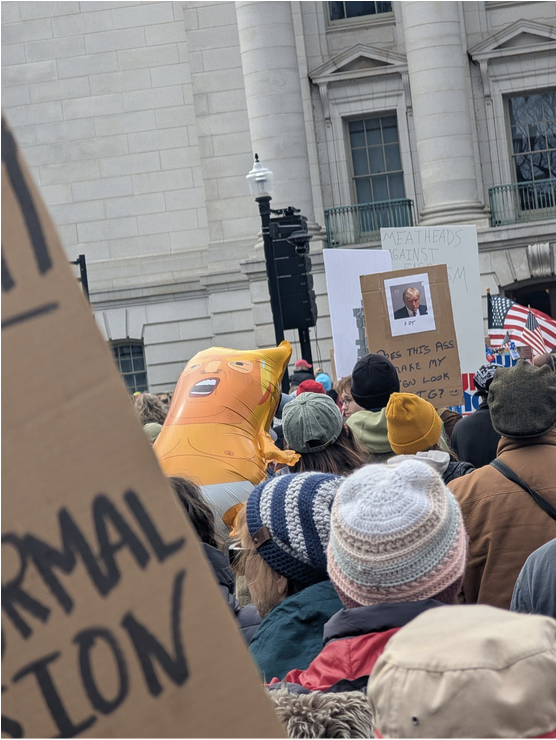














On October 1, 2025, our federal government shut down. As a result, thousands of federal workers are not being paid, certain government-funded programs have stalled, and Republicans and Democrats are at a political stalemate. Now, three weeks in, there seems to still not be an end in sight.
A shutdown occurs when Congress doesn’t approve funding measures for the government after October 1st, when the yearly budget for the government resets. Every year, Congress and the President must sign particular legislation, called appropriation bills or appropriations, that specifies which funds should be directed to certain purposes. Congress and the President must approve 12 appropriations that specify funds for the 12 subcommittees that support the military, the State Department, Health and Human Services, and the Department of Education, to name a few.
The current process that the federal government uses for their budget was established in 1976, and since then, there have been just four government shutdowns, but many cases of funding gaps where funds were not authorized for at least 24 hours. The longest shutdown was for 35 days in 2018, and as of writing, we are on day 26, so the current shutdown is on track to surpass that record if a deal is not made soon.
When deciding on how to divide the government spending bill, the parties immediately disagreed. Democrats disliked the GOP bill and demanded that it include tax reductions for health insurance and reverse cuts of government health programs and agencies. Because of this, Democrats have refused to give Republicans the 60 Senate votes that would pass the bill, and with the bill not appropriated by the deadline, the government was forced to shut down.
Federal employees cannot be paid if the appropriations have not been passed. In some cases, if the agency they fall under isn’t funded, they are suspended from working, or ‘furloughed,’ meaning they can’t work and won’t get paid. But some employees who are deemed essential, like air traffic controllers, must stay on the job without pay. The national effects of this so far are delays and cancellations in flights due to TSA agents and air traffic controllers calling in sick because of a lack of pay and the closing of National Parks, the National Zoo, and some museums because of the furlough of employees. Law enforcement, mail services, medical care staff, and border patrol are some of the federal staff continuing their jobs. Importantly, medical care and food assistance programs have been affected, leaving them to slowly run out of funding until the bill is decided, but with said cuts, the Supplemental Nutrition Assistance Program and FEMA could fail soon.
Both sides are showing no signs of budging as the shutdown continues, with 11 failed attempts t0 reopen the government in the Senate. As the nationwide consequences only get bigger, the question of “when will this be over” remains unclear, but a compromise of the appropriations bill will be what it takes to end it.